WhatsApp Business vs Personal: Which to Use for Alerts
Comparing a WhatsApp Business account vs a personal number for alerts: delivery speed, read receipts, quiet hours, and which one fits your workflow.
 by Nacho Coll
Nacho founded WallaWhats so you get the alerts that matter without depending on X's algorithm to surface them — pick the accounts you care about and get a WhatsApp for every post the moment it goes live, in order, nothing throttled or buried.
When setting up real-time alerts from X (Twitter) to WhatsApp, one of the most common questions we hear is: “Should I use my personal WhatsApp number or create a WhatsApp Business account?” The answer isn’t immediately obvious, especially since both options work perfectly well for receiving automated notifications.
Whether you’re a financial analyst tracking market-moving tweets, a journalist monitoring breaking news sources, or a startup founder keeping tabs on competitor announcements, the choice between WhatsApp personal and Business accounts can impact how you receive and manage your alerts. Let’s break down the key differences and help you make the right decision.
How WhatsApp Alert Delivery Actually Works
Before diving into the comparison, it’s important to understand that WallaWhats delivers alerts through WhatsApp’s standard messaging interface—the same way you’d receive a message from any contact. This means our alerts work identically on both personal WhatsApp accounts and WhatsApp Business accounts from a basic delivery perspective.
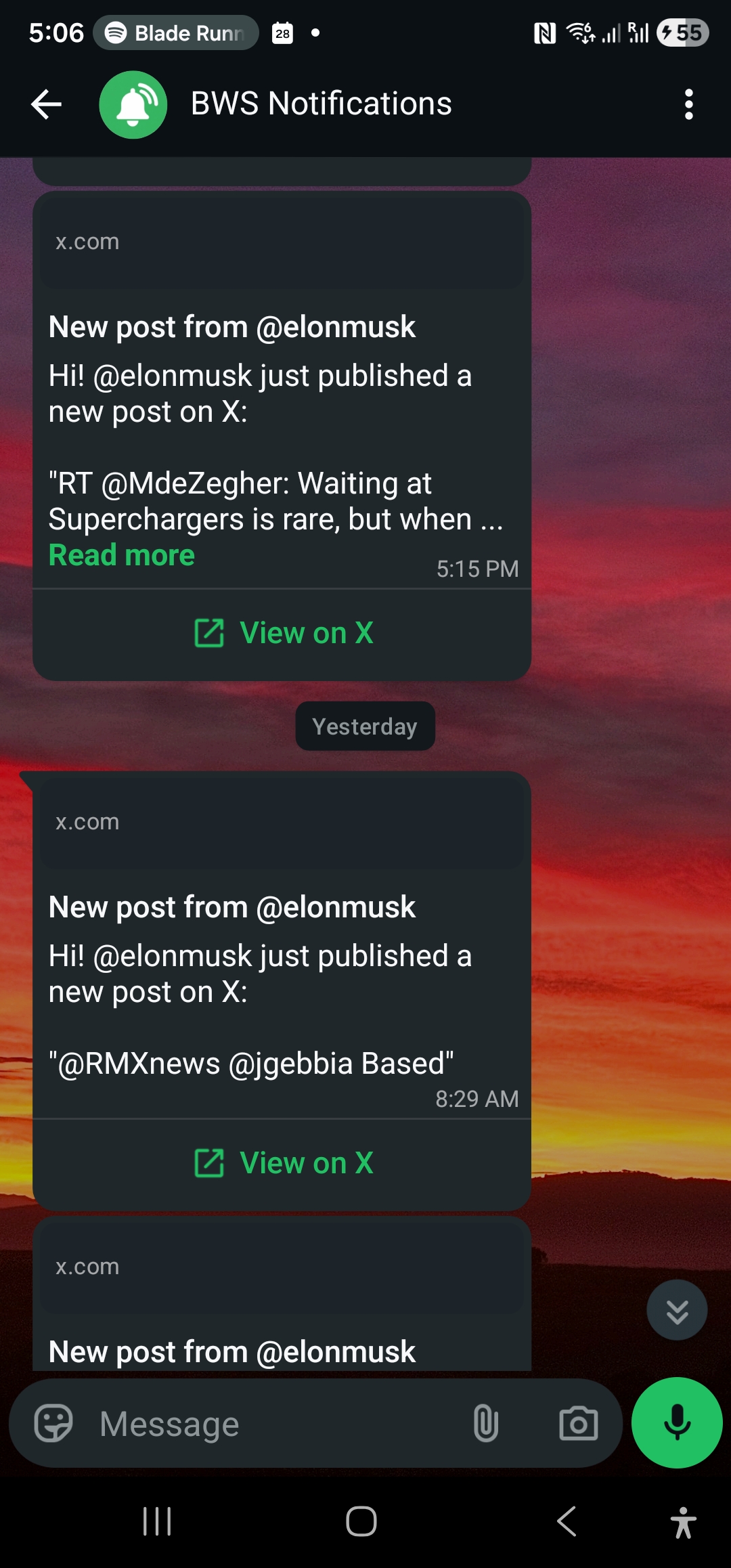
When you add your WhatsApp number to WallaWhats through our channels verification process, you’ll receive a one-time verification code. Once verified, alerts from your monitored X accounts arrive as regular WhatsApp messages, complete with the X handle, post content, timestamp, and a direct link back to the original tweet.
The core functionality—receiving near real-time notifications when your followed accounts post—remains exactly the same regardless of which WhatsApp account type you use.
WhatsApp Personal Numbers: The Simple Choice
For most individual users, a personal WhatsApp number is the straightforward choice for receiving alerts. Here’s why:
Immediate Setup
Your personal WhatsApp number is already active and verified with your phone. Adding it to WallaWhats takes just minutes—no need to create additional business profiles or verify new numbers with WhatsApp’s Business platform.
Read Receipt Visibility
This is where personal accounts have a slight edge for alert tracking. When you read an alert on your personal WhatsApp, and you have read receipts enabled in your privacy settings, WallaWhats can track that the notification reached you successfully.
Our notification history shows delivery status for every alert: queued, sent, delivered, and read. The “read” status only fires when WhatsApp confirms you’ve opened the message, which typically happens more reliably with personal accounts.
No Business Verification Requirements
WhatsApp Business accounts often require additional verification steps, especially if you’re using the WhatsApp Business API or want verified business badges. Personal accounts skip this entirely.
Privacy and Quiet Hours
Personal WhatsApp accounts give you full control over notification timing through WhatsApp’s built-in quiet hours feature. You can silence alerts during meetings, sleep, or focus time without affecting how WallaWhats delivers them—the messages still arrive, but your phone won’t buzz.
WhatsApp Business: When Teams Need Access
WhatsApp Business accounts make more sense in specific scenarios, particularly for teams and organizations that need shared access to critical alerts.
Multiple Device Access
WhatsApp Business can run on multiple devices simultaneously through the WhatsApp Business web client and desktop apps. This means your entire trading desk, newsroom, or startup team can monitor the same set of alerts without everyone needing to add their personal numbers to the WallaWhats account.
Professional Separation
If you’re already using WhatsApp Business for customer communication, keeping alerts separate from personal messages creates cleaner organization. Market-moving tweets from CEOs don’t get mixed in with family photos and friend conversations.
Business Hours and Away Messages
WhatsApp Business accounts can set business hours and automatic away messages. While this doesn’t affect how WallaWhats delivers alerts (our notifications aren’t conversations), it can help signal to clients or colleagues when you’re monitoring vs. offline.
Team Handoff Capabilities
For organizations with multiple shifts or on-call rotations, a Business account can be transferred between team members more easily than personal numbers. The same WallaWhats alert stream continues uninterrupted even when staff changes.
Read Receipts: A Key Technical Difference
One of the most significant differences between personal and Business accounts for alert purposes is how read receipts work.
Personal Account Read Receipts
On personal WhatsApp accounts, read receipts (the blue checkmarks you see after someone reads your message) work bidirectionally. When you read a WallaWhats alert, and your privacy settings allow read receipts, our system receives confirmation that you’ve seen the notification.
This is valuable for audit trails, especially in financial or journalism contexts where proving you received a market-moving alert at a specific time can be legally important.
Business Account Read Receipt Limitations
WhatsApp Business accounts have more complex read receipt behavior, particularly when multiple devices are connected or when using the Business API. The read status may not propagate as reliably, which means our notification history might show alerts as “delivered” but not “read” even when you’ve seen them.
For most users, this difference is cosmetic—you’re getting the alerts either way. But if you need precise delivery confirmation for compliance or documentation purposes, personal accounts provide cleaner tracking.
API Access and Team Integration
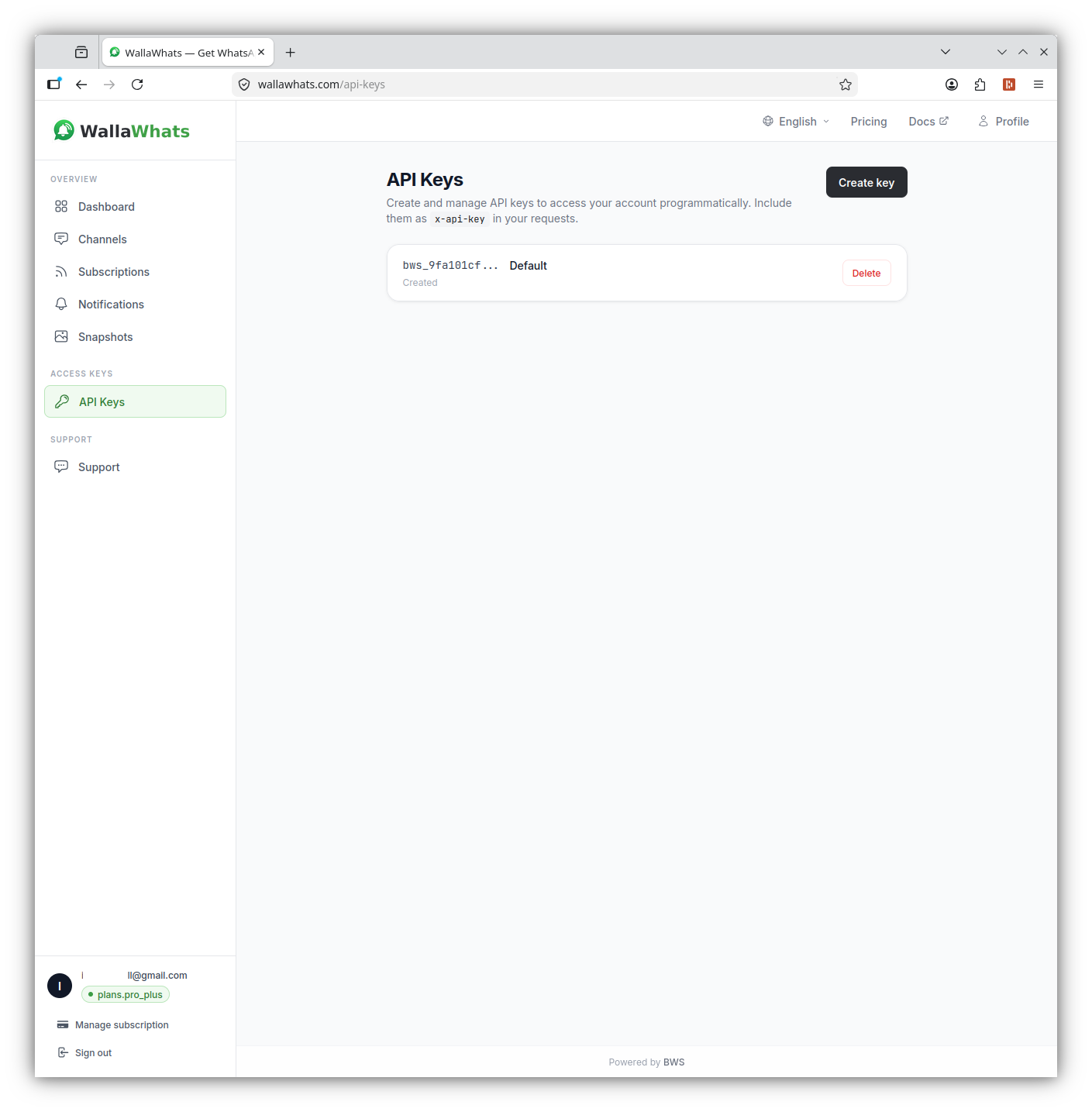
Both personal and Business WhatsApp numbers work identically with the WallaWhats API. Whether you’re building custom integrations or using our programmatic endpoints to manage subscriptions, the API treats both account types the same way.
Here’s how you’d add a WhatsApp channel (personal or Business) via our API:
curl -X POST https://api.wallawhats.com/channels \
  -H "x-api-key: your-api-key" \
  -H "Content-Type: application/json" \
  -d '{"type": "whatsapp", "destination": "+1234567890"}'
The verification process—receiving a one-time code via WhatsApp and confirming it in the dashboard—works identically for both account types. Once verified, alerts fan out to all your enabled channels regardless of whether they’re personal or Business numbers.
For teams building automated trading systems or newsroom dashboards that need to programmatically manage alert subscriptions, this consistency means you can design your integration once and support both account types without code changes.
Cost Considerations
Personal WhatsApp accounts are always free. WhatsApp Business accounts are also free for basic messaging functionality, but some advanced Business features (like the WhatsApp Business API for high-volume messaging) carry costs.
Since WallaWhats sends you inbound notifications rather than you sending outbound messages, both account types remain free for our use case. You won’t hit any WhatsApp Business messaging limits or charges by receiving alerts.
However, if you’re already paying for WhatsApp Business API access for customer communication, using the same Business number for WallaWhats alerts makes sense to consolidate your communication channels.
Quiet Hours and Do Not Disturb
Both personal and Business WhatsApp accounts support notification scheduling, but they handle it differently:
Personal Account Quiet Hours
Personal WhatsApp has a simple “Notifications” setting where you can mute all notifications during specified hours. This affects the phone’s notification sound and vibration but doesn’t stop messages from arriving—you’ll see them when you check WhatsApp manually.
For financial traders or journalists who need to stay responsive to breaking news but want to avoid alerts during sleep, this provides the right balance.
Business Account Scheduling
WhatsApp Business accounts can set “Business Hours” which display to customers, but this doesn’t control notification delivery. Instead, you’d use your phone’s overall Do Not Disturb settings or WhatsApp’s notification controls, similar to personal accounts.
The main advantage is that Business accounts can signal to team members when someone is “available” vs. “away” through status messages, which can be helpful for shared monitoring responsibilities.
Security and Privacy Implications
Both personal and Business WhatsApp numbers use the same end-to-end encryption for messages, so WallaWhats alerts are equally secure regardless of account type. However, there are some privacy considerations:
Personal Account Privacy
Your personal WhatsApp is linked to your phone number and typically associated with your real identity across social platforms and contact lists. This creates stronger identity verification but also means the alerts are tied to your personal digital footprint.
Business Account Privacy
Business accounts can use separate phone numbers and business identities, providing some separation between your personal communications and work-related alerts. This can be valuable if you’re monitoring competitor activity or sensitive market intelligence.
For individual traders or journalists, personal accounts are usually fine. For hedge funds, news organizations, or startups doing competitive intelligence, the business account separation might be worthwhile.
Multi-Channel Setups
Remember that WallaWhats supports both WhatsApp and email alerts simultaneously, and every alert fans out to all your verified channels. This means you can actually use both a personal WhatsApp number AND a Business account if needed.
For example, you might have:
- Personal WhatsApp for immediate mobile alerts during market hours
- Business WhatsApp for team access to the same alert stream
- Email for searchable archives and desktop notifications
Each channel verifies independently, and you can enable or disable them through the channels management page without affecting your X account subscriptions.
Our Recommendation
For individual users (analysts, traders, journalists, developers), stick with your personal WhatsApp number. It’s simpler to set up, provides better read receipt tracking, and keeps everything in one place where you’re already checking messages throughout the day.
Consider a WhatsApp Business account if you:
- Need team access to the same alert stream
- Want professional separation between personal and work notifications
- Are already using WhatsApp Business for customer communication
- Need to hand off monitoring responsibilities between team members
For organizations or teams, a Business account often makes more sense even if only one person is initially monitoring. It’s easier to add team members later than to migrate alert history and subscriptions.
Getting Started
Regardless of which WhatsApp account type you choose, the setup process through WallaWhats is identical. You’ll add your phone number on our channels page, receive a verification code via WhatsApp, and start receiving alerts within seconds of your monitored X accounts posting.
Both personal and Business accounts support our full feature set: real-time delivery, notification history, API access, and integration with email channels. The choice comes down to your organizational needs and privacy preferences, not technical limitations.
Remember that you can always add additional WhatsApp numbers later—WallaWhats Business and Enterprise plans support multiple WhatsApp destinations, so you’re not locked into your initial choice.
Ready to receive X alerts on WhatsApp? See the full setup guide for X Twitter alerts on WhatsApp. Looking for a free TweetDeck replacement? See WallaWhats as a TweetDeck alternative.
Never miss an important post again. Create a free account — 1 WhatsApp number, real-time alerts, no credit card required.
About the author
Nacho Coll
Founder & Engineer at WallaWhats
Nacho founded WallaWhats so you get the alerts that matter without depending on X's algorithm to surface them — pick the accounts you care about and get a WhatsApp for every post the moment it goes live, in order, nothing throttled or buried. Writes about real-time notification systems, social-signal monitoring, and serverless delivery pipelines from the operator side of the wire.