Real-Time X Monitoring for Journalists: Break News First
How reporters use WALLAWHATS to track sources, rival desks, and breaking news on X — with instant WhatsApp delivery and zero algorithmic interference.
 by Nacho Coll
Nacho founded WallaWhats so you get the alerts that matter without depending on X's algorithm to surface them — pick the accounts you care about and get a WhatsApp for every post the moment it goes live, in order, nothing throttled or buried.
Journalists live and die by breaking news. But X’s algorithm doesn’t care about your deadline — or whether that crucial source tweet gets buried under promoted posts and engagement-bait threads.
In today’s fast-moving news environment, missing a key development by even minutes can mean losing the story. That’s why reporters, editors, and news organizations are moving beyond feed-scrolling to direct, real-time monitoring of their critical X accounts.
The Algorithm Problem for News
X’s feed algorithm optimizes for engagement, not urgency. A breaking news tweet from a government official might get deprioritized if users aren’t immediately liking and retweeting it. Meanwhile, a viral meme sits at the top of your timeline.
For journalists, this creates several critical gaps:
Timing Delays: Important posts can take hours to surface in your feed — if they appear at all.
Source Visibility: The accounts you need to monitor most (officials, experts, competing reporters) might post infrequently, making their content easy to miss between high-engagement posts.
Context Loss: By the time you see a breaking tweet, the story may have already evolved, and you’re reacting rather than reporting.
Mobile Gaps: When you’re away from your desk, X’s mobile notifications are inconsistent and often delayed.
The solution isn’t checking X more frequently — it’s getting direct, real-time notifications when the accounts that matter to your beat post new content. If you’re tracking token launches or exchange announcements instead of breaking news, see Track Crypto Accounts on X.
How Real-Time X Monitoring Works
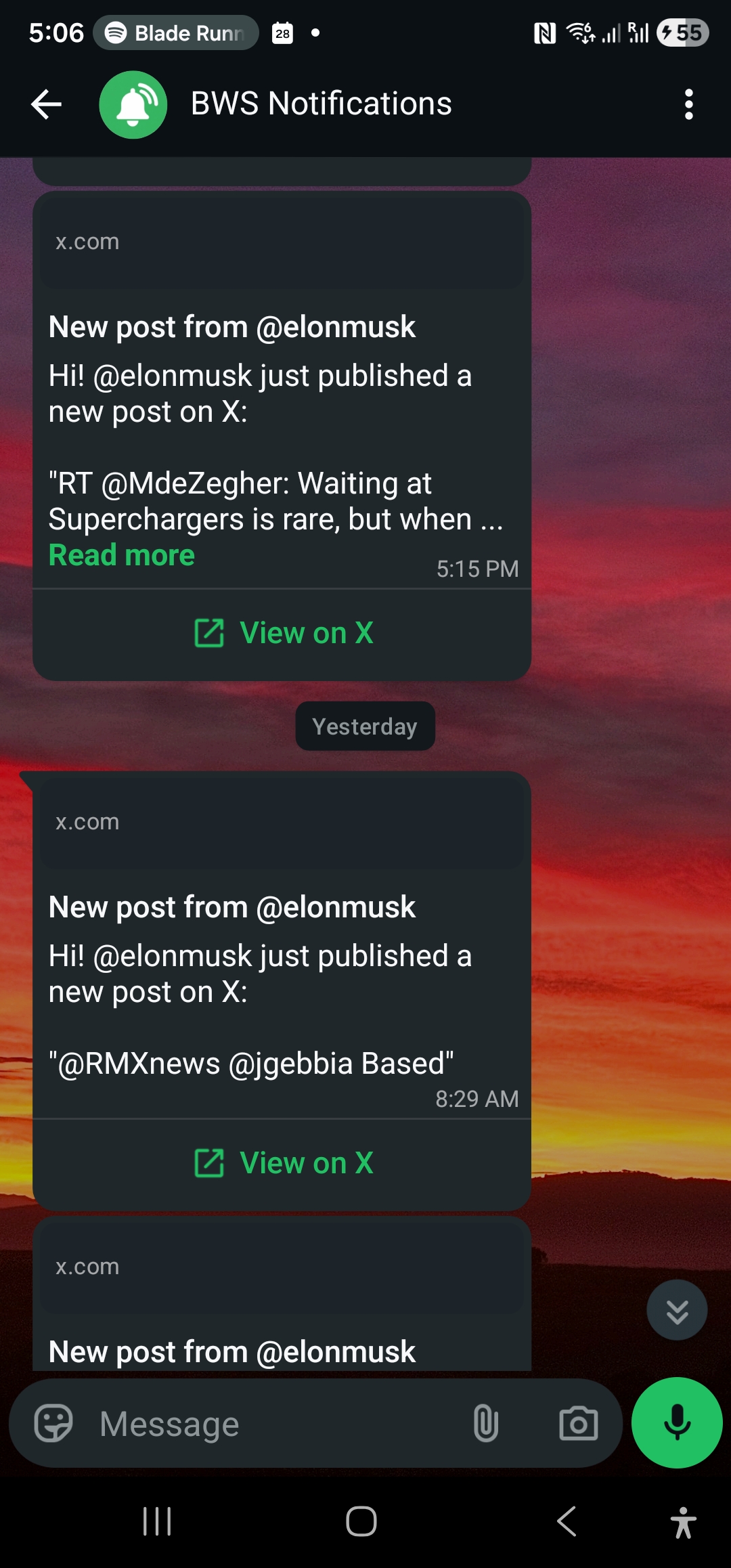
Rather than fighting the algorithm, WALLAWHATS bypasses it entirely. You select specific X accounts to monitor, and every new post triggers an instant WhatsApp message with a direct link to it, and an email carrying the full tweet content.
Here’s what that looks like in practice:
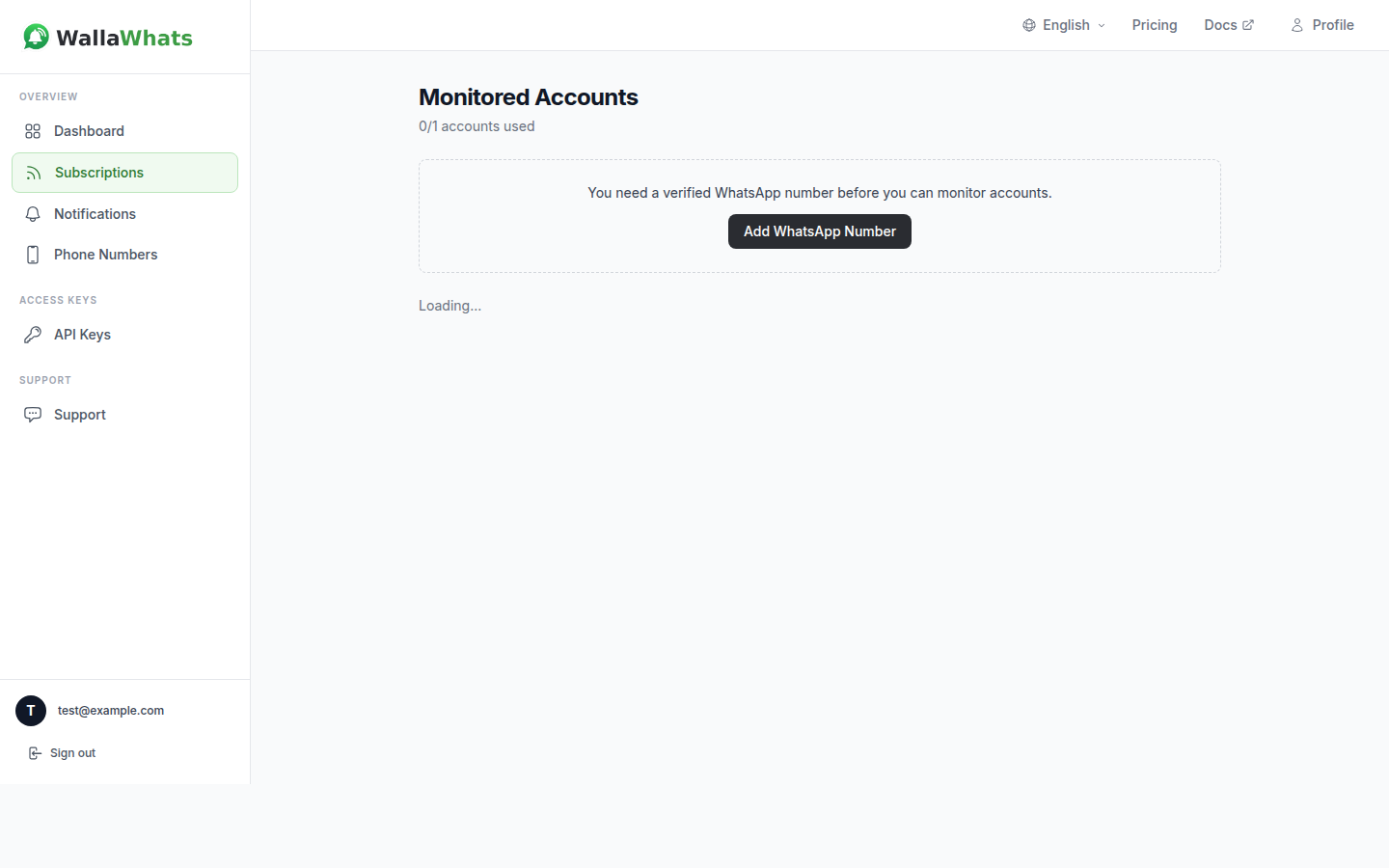
Account Selection: Instead of hoping important accounts surface in your feed, you explicitly subscribe to the ones that matter for your beat — whether that’s 5 accounts or 50.
Instant Delivery: Within seconds of a post going live on X, you receive a WhatsApp notification with the complete text, plus a link to view the full thread and replies on x.com.
Zero Algorithm Interference: You see every public post from your monitored accounts, in chronological order, regardless of engagement metrics.
Multi-Device Access: Notifications arrive on your phone whether you’re at your desk, in the field, or traveling.
Essential Use Cases for Journalists
1. Source List Management
Every journalist has a core group of sources whose statements can make or break a story. Government officials, industry executives, policy experts, and institutional accounts that rarely post but when they do, it’s news.
Example Setup:
- Federal Reserve officials for economics reporters
- City council members for local government beats
- Company executives for business journalism
- Medical researchers for health reporting
Rather than hoping these low-frequency, high-impact accounts appear in your algorithmic feed, you monitor them directly. When the FDA Commissioner tweets about a drug approval or a tech CEO announces layoffs, you know within seconds.
2. Breaking News Beat Monitoring
For breaking news coverage, you need to track not just official sources, but the network of reporters, emergency services, and eyewitness accounts that often break stories first.
Multi-Layer Approach:
- Primary sources (government agencies, police departments)
- Competing reporters on your beat
- Local news stations in your coverage area
- Verified eyewitness accounts and local journalists
This creates a comprehensive early-warning system. If multiple accounts in your network start posting about the same developing situation, you’re alerted immediately rather than discovering it hours later when it’s already trending.
3. Competitive Intelligence
Tracking what other reporters and news organizations are covering helps you identify story opportunities and ensures you don’t miss industry developments.
Strategic Monitoring:
- Reporters at competing outlets covering your beat
- News organizations in your market
- Journalists known for breaking stories in your field
- Trade publication accounts and industry newsletters
When a competing reporter tweets about a source they’re interviewing or a story they’re developing, you can pursue related angles or develop your own sourcing on the topic.
4. Crisis and Emergency Response
During natural disasters, political crises, or breaking news events, information velocity is critical. Traditional news gathering methods are too slow when events are unfolding in real-time.
Crisis Configuration:
- Emergency management agencies
- Local government officials
- First responder accounts
- Verified eyewitness accounts in the affected area
This approach proved invaluable during events like hurricane landfalls, wildfire evacuations, and major news developments where official information changes rapidly.
Setting Up Your Journalist Monitoring System
Step 1: Account Prioritization
Start by categorizing your essential accounts:
Tier 1 - Breaking News Priority: Accounts whose posts always warrant immediate attention (5-10 accounts maximum)
- Key government officials on your beat
- Major institutional accounts
- Primary sources for ongoing stories
Tier 2 - Regular Monitoring: Important accounts that post more frequently (10-30 accounts)
- Industry experts and analysts
- Competing reporters
- Secondary sources and organizations
Tier 3 - Context and Color: Accounts that provide background and trends (varies widely)
- Think tanks and research organizations
- Trade associations
- Local news aggregators
Step 2: Technical Setup
WALLAWHATS supports multiple notification channels, allowing you to route different priority levels appropriately:
WhatsApp (default): Best for immediate alerts that need your attention wherever you are Email: Good for monitoring accounts that post frequently but with lower urgency
Each channel requires verification with a one-time code before alerts can be delivered, ensuring secure access to your notifications.
Step 3: Workflow Integration
The most effective monitoring setups integrate with existing editorial workflows:
Breaking News Protocol: When a Tier 1 account alert arrives, immediately check for additional context and begin verification process.
Daily Briefing: Use email alerts for lower-priority accounts to create a daily briefing of activity in your coverage area.
Source Development: Monitor new accounts recommended by existing sources or discovered through story research.
API Integration for Newsrooms
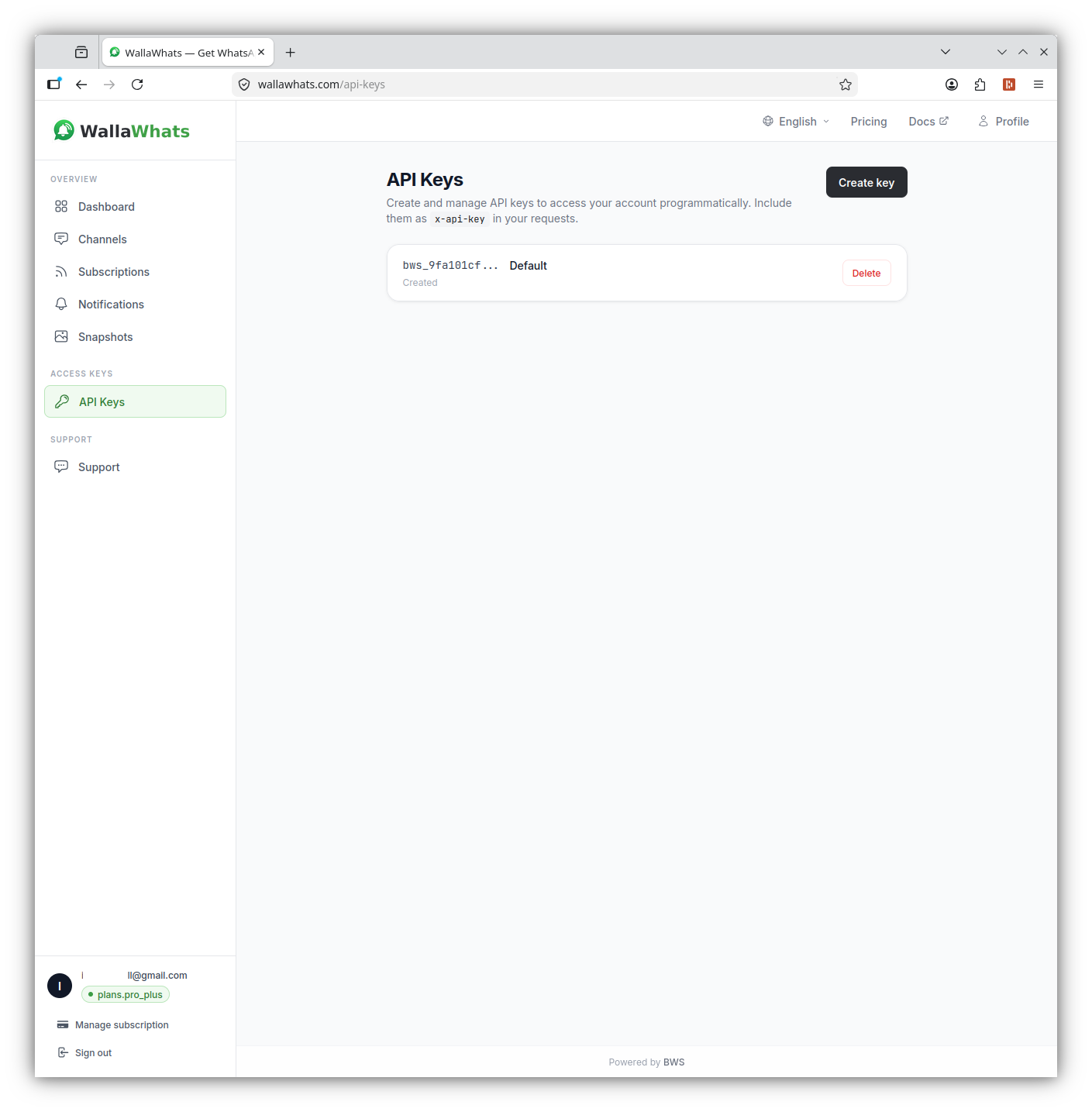
News organizations can integrate WALLAWHATS monitoring into their editorial tools using the API. All plan tiers include API access, with key limits scaling from 1 key on the Free plan to 20 keys on Enterprise.
Adding Account Monitoring
curl -X POST https://api.wallawhats.com/subscriptions \
  -H "x-api-key: YOUR_API_KEY" \
  -H "Content-Type: application/json" \
  -d '{"xUsername": "FederalReserve"}'
Retrieving Notification History
curl -X GET "https://api.wallawhats.com/notifications?from=1672531200000&to=1672617600000" \
  -H "x-api-key: YOUR_API_KEY"
This returns delivery status for all alerts in the specified timeframe, allowing newsrooms to track which breaking news alerts were successfully delivered to their teams.
Managing Channel Preferences
# Add WhatsApp notification channel
curl -X POST https://api.wallawhats.com/channels \
  -H "x-api-key: YOUR_API_KEY" \
  -H "Content-Type: application/json" \
  -d '{"type": "whatsapp", "destination": "+1234567890"}'

# Add email for lower-priority monitoring
curl -X POST https://api.wallawhats.com/channels \
  -H "x-api-key: YOUR_API_KEY" \
  -H "Content-Type: application/json" \
  -d '{"type": "email", "destination": "reporter@newsroom.com"}'
Newsrooms can programmatically manage monitoring lists and notification preferences for their entire reporting staff.
Advanced Monitoring Strategies
Geographic Beat Coverage
For reporters covering specific regions, monitoring local government accounts, emergency services, and community organizations creates comprehensive situational awareness.
Local Government Stack:
- Mayor and city council members
- Police and fire department accounts
- School district communications
- Regional emergency management
Community Layer:
- Local news outlets and bloggers
- Business association accounts
- Verified community leaders
- Regional transportation authorities
Investigative Research
Long-form and investigative journalists use WALLAWHATS to track subjects and related entities over extended periods, building comprehensive timelines of public statements and activities.
Corporate Investigation Example:
- Executive social media accounts
- Company investor relations
- Industry trade groups
- Regulatory agencies with oversight authority
Election and Political Coverage
Political reporters monitor candidates, campaigns, and related entities across multiple electoral cycles, tracking messaging changes and strategic communications in real-time.
Campaign Coverage Setup:
- Candidate personal and official accounts
- Campaign manager and staff accounts
- Party organization communications
- Issue advocacy groups and PACs
Specialized Beat Intelligence
Different journalism specialties require unique monitoring approaches:
Technology Reporting: Framework maintainers, startup founders, tech company accounts, developer communities
Financial Journalism: Federal Reserve officials, bank executives, regulatory agencies, market-moving analyst accounts
Health Reporting: Medical institutions, researcher accounts, regulatory agencies, patient advocacy groups
Climate and Environment: Weather services, environmental agencies, climate researchers, conservation organizations
Best Practices for Journalists
Verification Before Publication
Real-time alerts give you speed, but verification remains essential. Use the immediate notification as a starting point for your reporting process:
- Confirm the Account: Ensure the monitored account is verified and legitimate
- Check for Context: Review replies and quote tweets for additional information
- Cross-Reference: Look for corroborating posts from other sources in your network
- Direct Verification: Contact the source directly when possible for quotes or clarification
Managing Information Overload
Effective monitoring requires discipline to avoid notification fatigue:
Quality Over Quantity: Better to monitor 20 essential accounts effectively than 100 accounts poorly
Regular Review: Monthly review of monitored accounts — remove dormant accounts, add new important voices
Channel Separation: Use different notification channels for different priority levels
Time Boundaries: Consider muting non-essential alerts during off-hours unless covering breaking news
Source Protection and Ethics
When monitoring includes sensitive sources or developing stories:
Account Privacy: Monitor only public accounts — WALLAWHATS doesn’t support private or protected accounts
Source Consent: Be transparent with sources about monitoring their public statements
Attribution: Always link back to the original tweet when citing content in articles
Context Preservation: Include enough context to avoid misrepresenting statements taken from longer threads
Measuring Impact on Your Reporting
Speed Metrics
Track how real-time monitoring improves your response time to breaking news:
Alert to Publication: Time from receiving notification to publishing initial coverage Competitive Advantage: How often you break or match competitor timing on stories Source Response: Speed of reaching out to sources after their statements
Story Development
Monitor how direct account watching enhances your journalism:
Source Discovery: New sources found through monitoring existing accounts’ interactions Story Angles: Fresh perspectives discovered through real-time source monitoring Breaking News Coverage: Stories you covered that you would have missed without alerts
Editorial Workflow
Evaluate integration with your existing news gathering process:
Daily Planning: How monitoring alerts inform your daily story planning Weekend Coverage: Maintaining awareness during off-hours through automated alerts Team Coordination: Sharing critical alerts with editors and colleagues
For tips on getting started with your first monitoring setup, check out our Getting Started guide. If you’re interested in tracking competitor communications, see our article on monitoring business competitors and market signals.
Pricing for News Organizations
WALLAWHATS scales from individual reporters to entire newsrooms:
Free Plan: 3 monthly alerts, 2 X accounts, 1 WhatsApp number — perfect for testing key source monitoring
Pro ($5/month): 50 alerts, 3 accounts — good for freelancers or specialized beat reporters
Pro+ ($12/month): 250 alerts, 10 accounts — ideal for active reporters
Business ($29/month): 1,000 alerts, 20 accounts, 3 WhatsApp numbers — suitable for news desk teams
Enterprise ($99/month): 3,000 alerts, 50 accounts, 10 WhatsApp numbers — built for newsroom-wide deployment
All plans include API access and tweet snapshots in email alerts (plus a 30-day searchable gallery on the dashboard). Enterprise provides dedicated support for editorial workflow integration.
Conclusion
In a media environment where every minute counts, algorithmic feeds aren’t enough. Journalists need direct, unfiltered access to their most critical sources.
Real-time X monitoring transforms how you gather news — from reactive feed-scrolling to proactive source surveillance. When the story breaks, you’re already on it.
Never miss an important post again. Create a free account — 1 WhatsApp number, real-time alerts, no credit card required.
About the author
Nacho Coll
Founder & Engineer at WallaWhats
Nacho founded WallaWhats so you get the alerts that matter without depending on X's algorithm to surface them — pick the accounts you care about and get a WhatsApp for every post the moment it goes live, in order, nothing throttled or buried. Writes about real-time notification systems, social-signal monitoring, and serverless delivery pipelines from the operator side of the wire.